We're Short on Tradespeople. So Why Are We Paying Them to Do Paperwork?
Technicians lose more than seven hours a week to admin. In a trades labour shortage, that is a missing employee sitting in the van typing job notes.
 The FrontSail AI team6 min read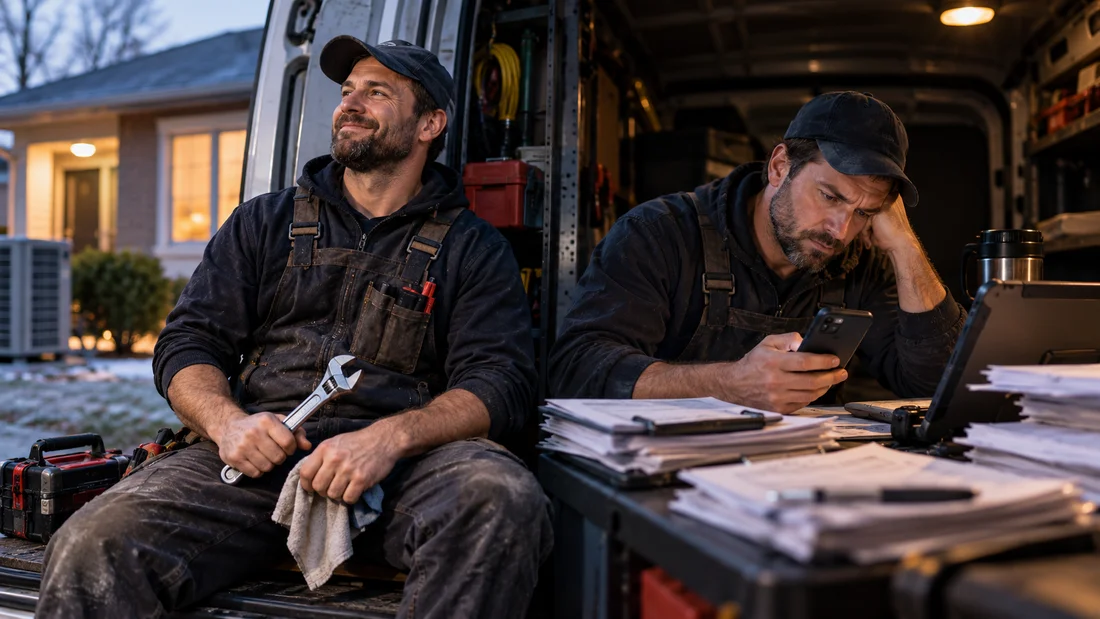
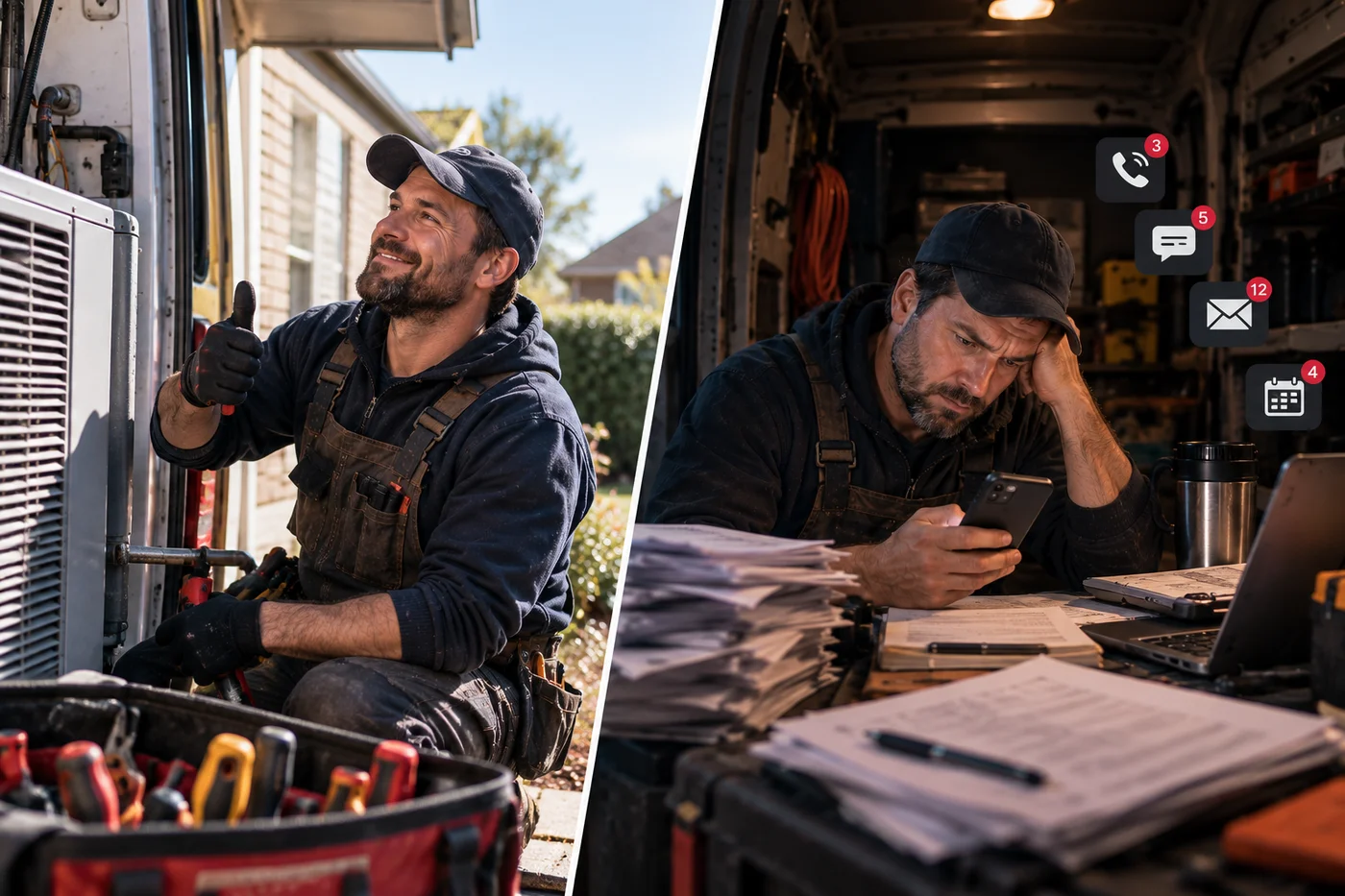
It is 5:17 p.m.
An HVAC technician has finished his last job. The furnace works. The customer is warm. Civilization has survived another Canadian winter.
But he cannot leave yet.
He still has to type the job notes, upload photos, record the parts he used, tell the office a quote is needed, update the customer, and explain why tomorrow’s first appointment may be late.
The repair is finished.
The second shift has begun.
We need more tradespeople. Obviously.
On September 1, the Lowe’s Foundation launched a coalition of more than 75 organizations aiming to train and develop one million skilled-trades workers by 2035. It says 2.1 million U.S. trade jobs could otherwise go unfilled by 2030.
Canada faces the same problem. The federal government estimates that the country will need more than 1.4 million new trades workers by 2033, including more than 410,000 openings in construction alone.
So yes: train more apprentices. Make trade careers more attractive. Remove unnecessary barriers. Bring more skilled people into the industry.
But while we wait years for that workforce to arrive, perhaps we should stop wasting the one we already have.
Salesforce’s 2026 field-service research found that technicians spend more than seven hours per week on administrative tasks such as completing forms and hunting for information. That is about 18% of their working time.
For a company with five technicians, that is roughly 35 hours every week. Almost an entire additional employee is already on the payroll.
He is just sitting in the van updating the job record.
Your best technician should not be your most expensive data-entry clerk
Tradespeople are hired because they can diagnose difficult problems, work safely, make judgment calls, and fix things the rest of us have already made worse by watching a nine-minute YouTube video.
Yet much of their week is spent doing work that requires none of those skills.
They retype the customer’s address. Search through old messages. Copy job details between systems. Explain the same update to the office and the customer. Fill out forms designed by someone who has never tried using a phone outdoors, in gloves, with 12% battery.
The industry says skilled labour is scarce.
Then it takes a licensed technician and turns him into a mobile administrative assistant.
Annoying, yes. Also a capacity problem.
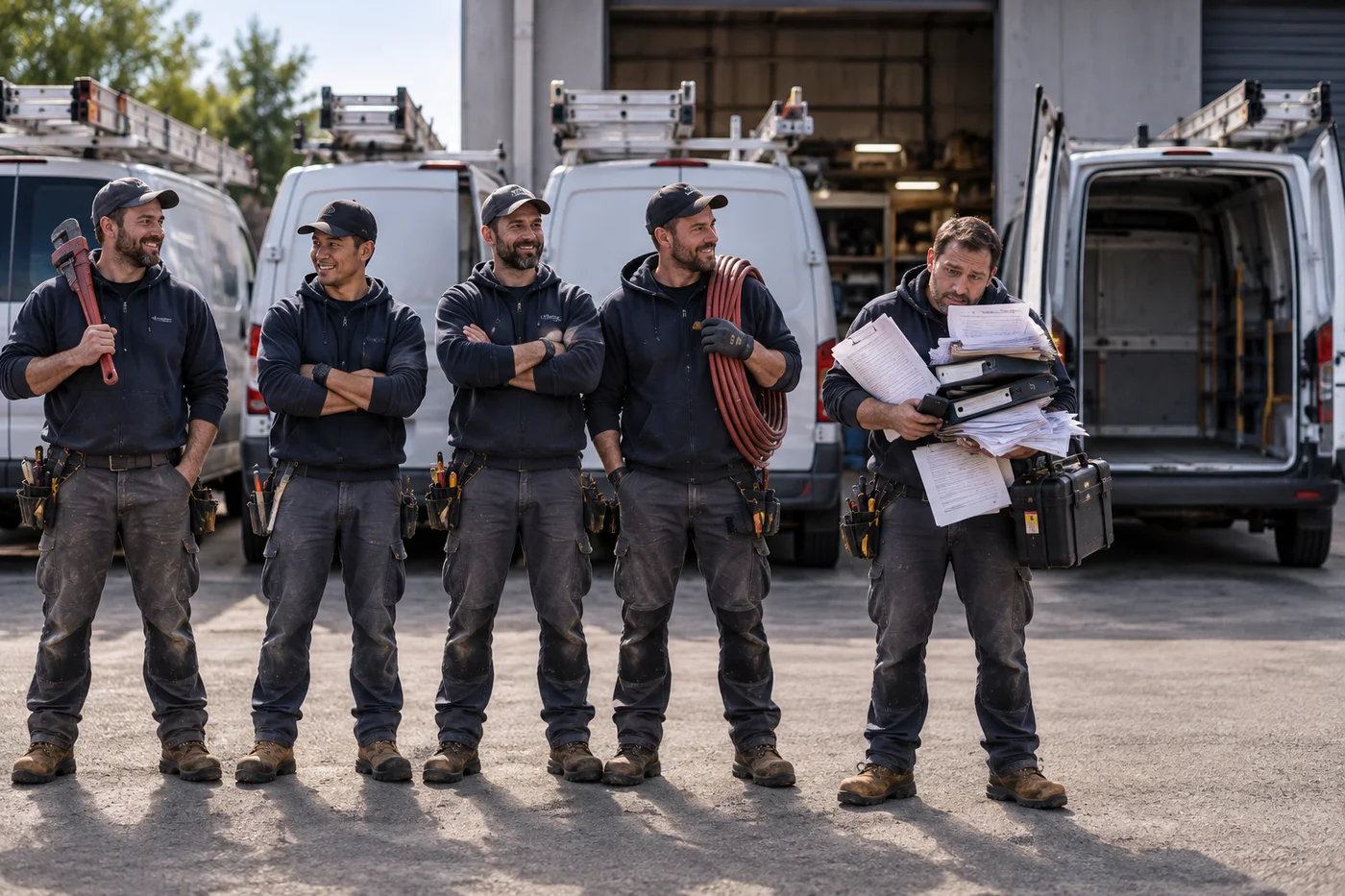
Five technicians on the payroll. Roughly four out on jobs, and one worth of capacity going into paperwork.
Software did not eliminate the paperwork
Field-service software was supposed to solve this.
Often, it digitized the same paperwork and moved it onto a smaller screen.
The technician still enters the information. The dispatcher still searches for it. The owner still checks whether anyone followed up. The customer still calls asking what is happening.
But now everything is in the cloud, so the confusion can be accessed from anywhere.
When the systems do not talk to each other, a person becomes the integration layer. In field service, that person is often holding a wrench.
The next generation of software should not merely give technicians nicer forms.
It should absorb the work surrounding the job.
When the technician finishes, he should be able to say:
“Blower motor is failing. Customer wants a replacement quote and an optional thermostat. About two hours of labour. Photos are attached.”
That should be enough.
The system can organize the note, update the work order, identify the next step, prepare the quote using company rules, notify the office, and draft the customer update.
The technician reviews what matters and moves on.
No small novel typed with two thumbs in the van.
AI should work around the craft
The loudest AI conversations usually ask whether machines will replace workers.
In field service, that is often the wrong question.
AI is not climbing onto an icy roof tomorrow. It is not squeezing behind a furnace, smelling something strange, and deciding that the installation manual and physical reality have entered into a disagreement.
Skilled work still requires judgment, experience, dexterity, and responsibility.
But the work around the craft is different.
Calls need to be answered. Job details need to be collected. Notes need to become work orders. Customers need updates. Quotes and invoices need preparation. Missing information needs to be chased.
None of that fixes a furnace.
All of it consumes the people who do.
Before asking AI to replace a tradesperson, use it to stop wasting one.
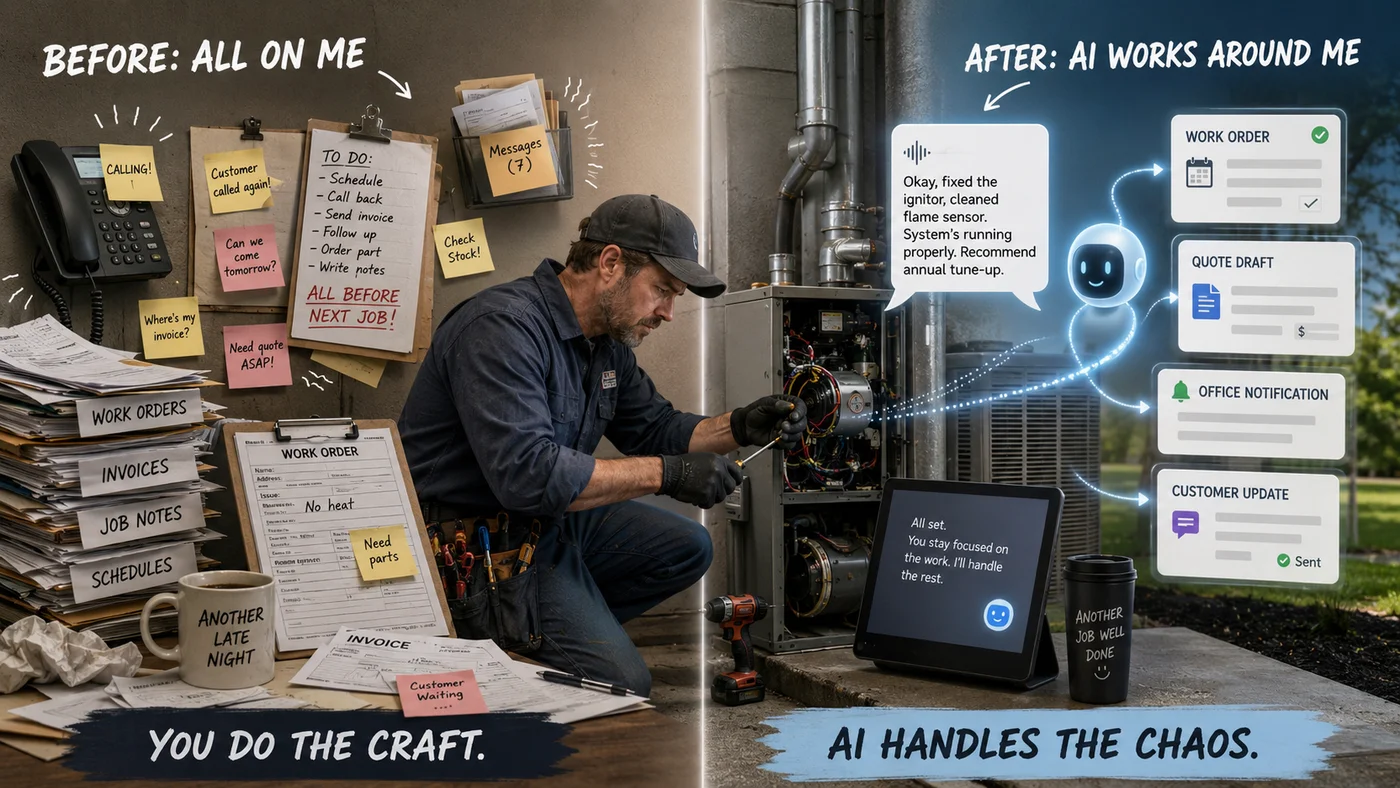
The craft and the judgment stay with the technician. The work surrounding the job does not have to.
Give the hours back
This is the direction behind FrontSail AI.
It starts where work enters the company: phone calls and messages. But answering the call is not the final goal. The call is over long before the work is.
The useful assistant carries the context forward. It collects proper intake before dispatch, keeps urgent requests visible, and turns field notes into structured work. It can draft the routine updates and documents. Pricing decisions, unusual cases, and anything needing real judgment stay with people.
Not every trade business needs fewer employees. Many need more.
But before hiring another person to compensate for broken handoffs and administrative drag, recover the capacity already being lost.
The fastest way to add field capacity may not be finding another technician. It may be letting the technicians you already have get back to their actual jobs.
AI does not need to replace the person holding the wrench. It needs to handle what happens before and after the wrench.
Get the hours back before you hire
The fastest way to add field capacity may not be finding another technician. It may be letting the ones you already have get back to their actual jobs.
With FrontSail AI, you can create a virtual Frontdesk assistant that answers the calls your crew cannot, collects proper intake before dispatch, and keeps the job visible after the conversation ends, so field notes become work orders instead of evening homework.
Start with the admin that already leaks: missed calls, intake, and the update nobody had time to send.