Google Search Is Learning to Pick Up the Phone
Google's AI now calls local businesses to check pricing and availability. Being discoverable is no longer enough. You also have to be reachable.
 The FrontSail AI team6 min read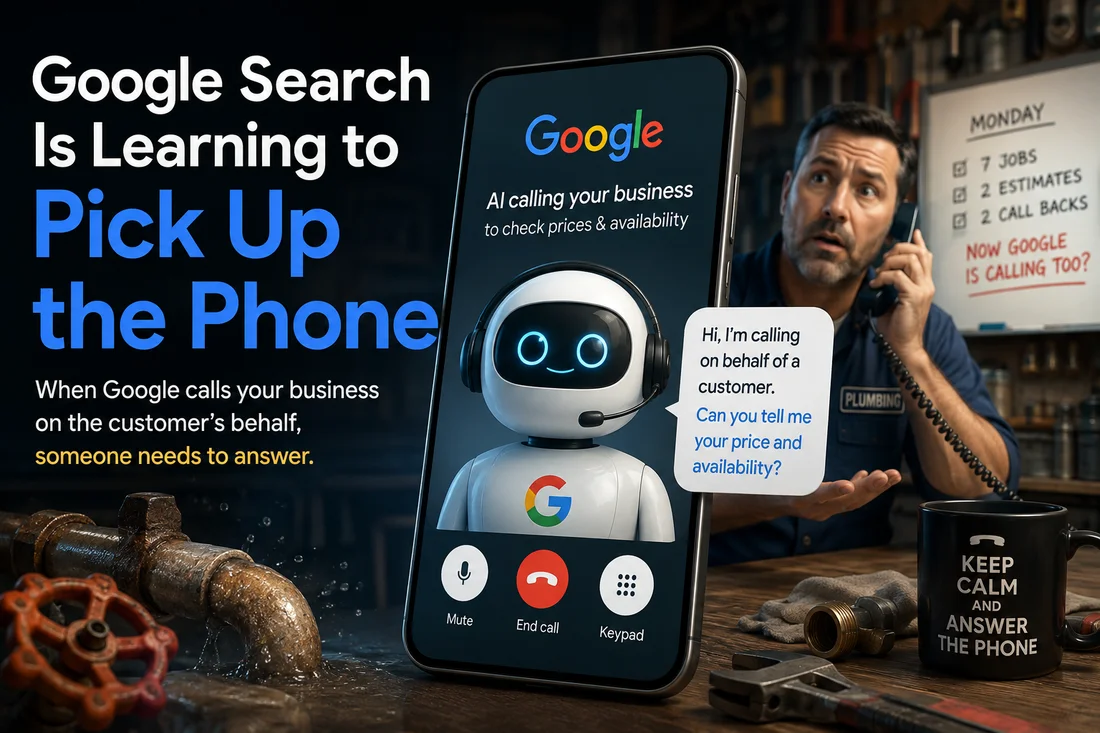
A homeowner needs a plumber. The water heater is leaking, tomorrow would be nice, and he does not want to call six companies and explain the same problem six times.
So he asks Google.
Until recently, Google’s role was predictable: show a few plumbers, display reviews, offer a map, then step aside while the customer did the work.
That boundary is disappearing.
Google’s AI Mode can research local services and check pricing and availability. When the answer is not published anywhere, it can phone the business and ask.
The customer may never call the plumber. Google does.
That sounds like a convenient little Search feature. It is probably more important than that.
Search has crossed the front desk
For years, local SEO was about making a business legible to machines: services, locations, hours, reviews and contact details.
That still matters. A fast, mobile-friendly, SEO-optimized site still improves how visible a local business is in Google Search, especially when it says plainly what the company does and where it works.
The familiar journey was:
Customer searches → Google recommends → customer calls → business takes over.
Now a customer can ask:
“Find a plumber who can replace a water heater tomorrow and tell me roughly what it costs.”
Google can search the web first. If something is missing, it can pick up the phone and ask.
Search no longer necessarily ends at the phone number. It may continue through it.
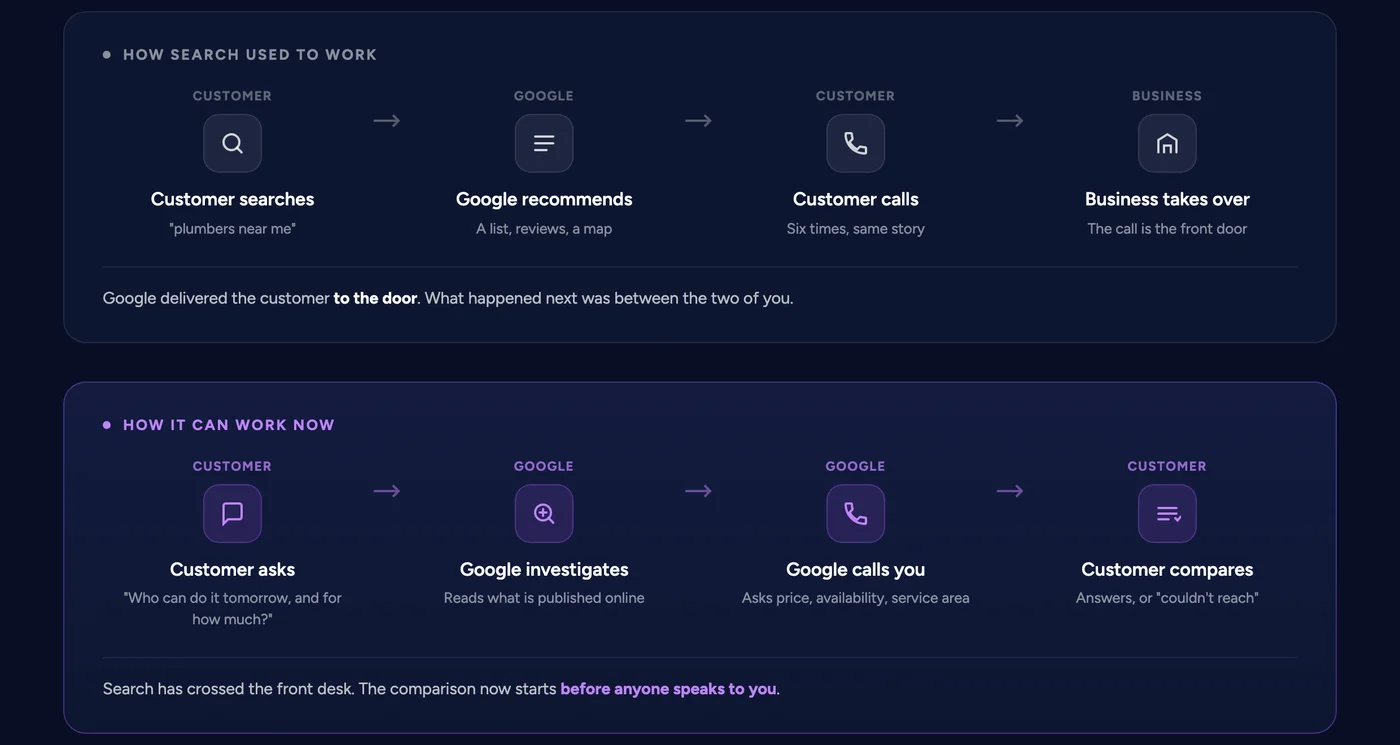
The old journey ended at your phone number. The new one can continue straight through it.
And then somebody has to answer
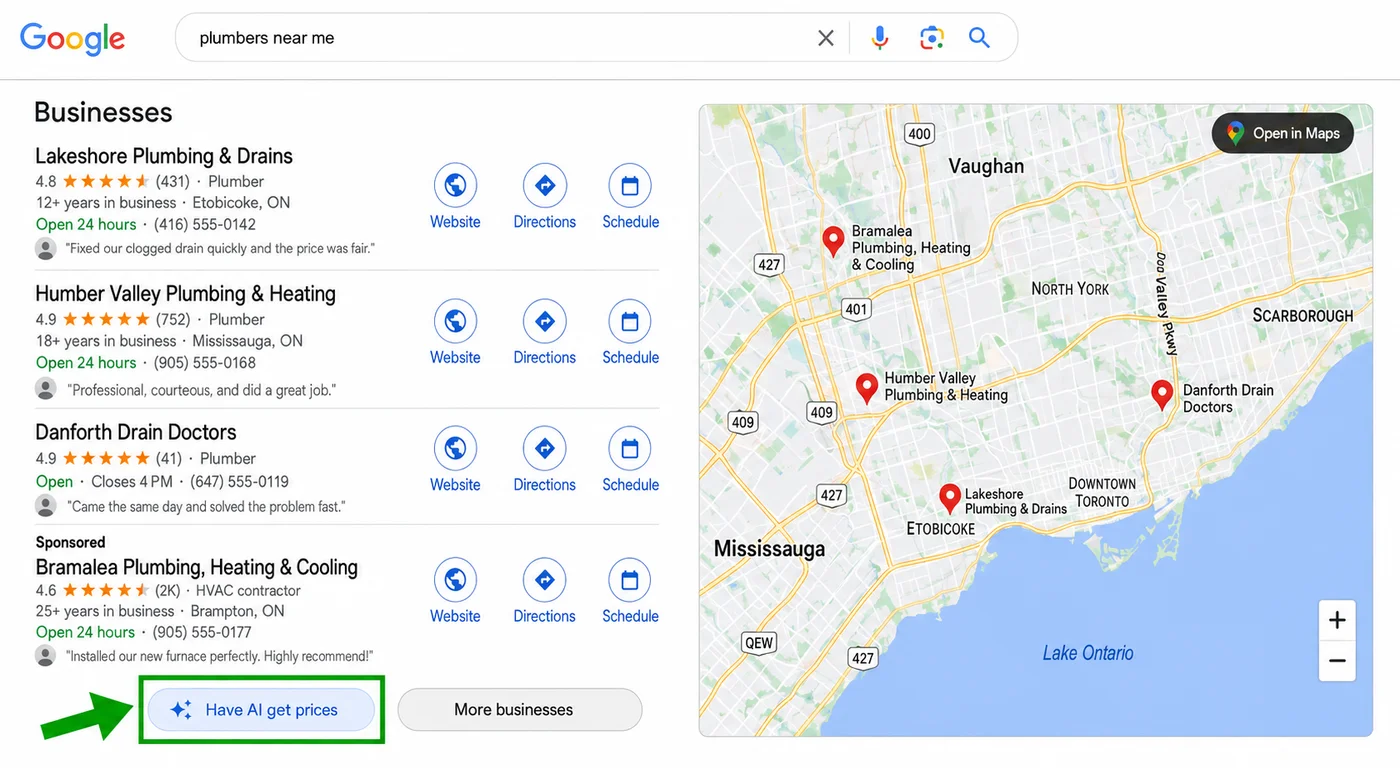
Illustration. The button that starts it, as it would look for a GTA search. Google has shipped this across the United States; Canada is expected but not live yet. The businesses, reviews and phone numbers here are invented.
Torro Media tested Google’s price-checking feature with local plumbers. About 22 minutes later, Google returned information from businesses it had reached, along with another section:
“Businesses we couldn’t reach.”
Nobody was dramatically banished to page 47. Google just had useful, current information about some businesses and very little about the others.
Put yourself in the customer’s shoes. One plumber is available tomorrow and provides a rough range. Another can come Thursday and explains the service fee. Three could not be reached.
Which ones feel like real options?
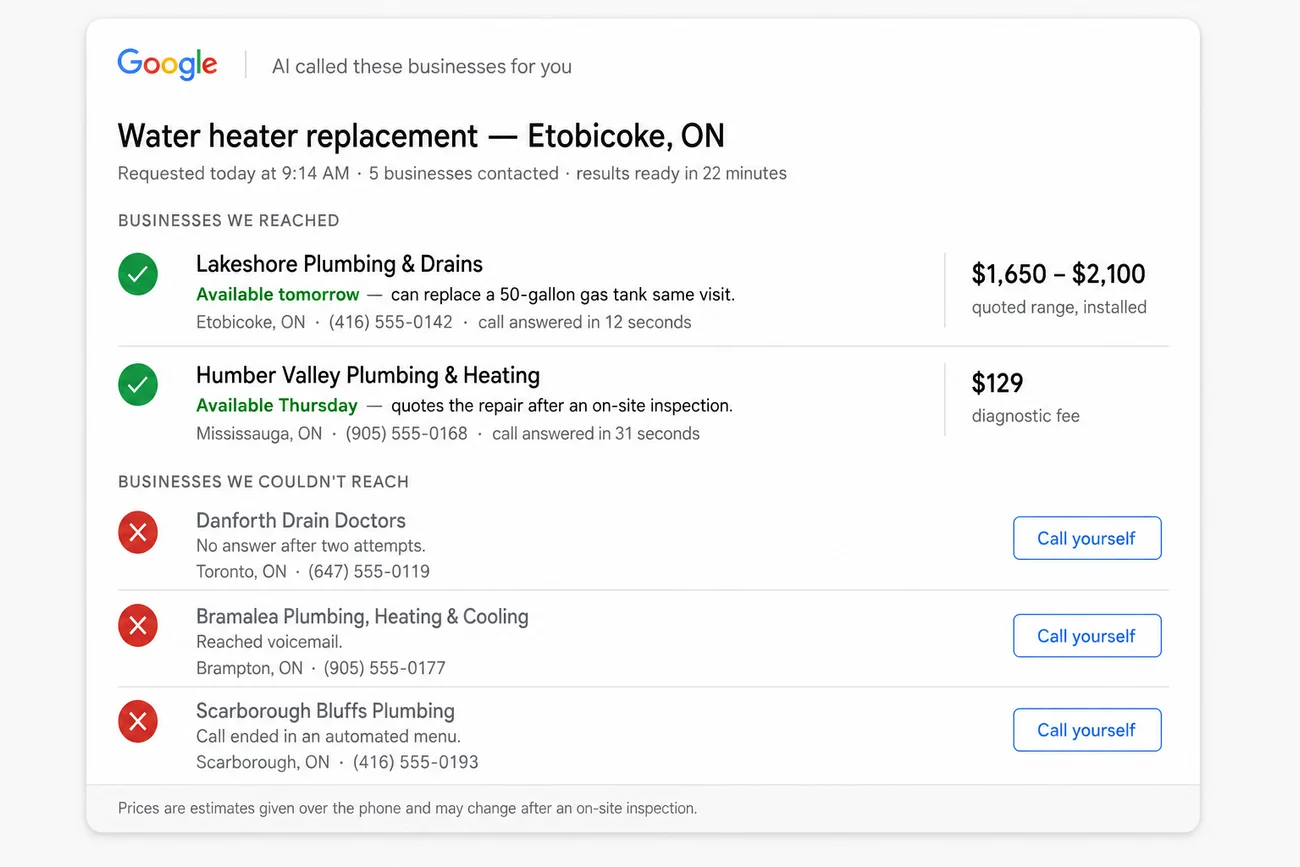
Illustration. Two businesses answered the question. Three did not. The customer sees both lists side by side.
Google does not need to announce a mysterious ranking penalty for this to matter. It asked a question. Some businesses answered. The customer saw the result.
Voicemail now looks different
Imagine Google calls an HVAC company at 10:17 on Monday morning.
The office is busy, the technicians are on jobs, and the owner is driving. The call reaches:
“Your call is very important to us…”
It probably is. Nobody is currently available to prove it.
This problem is not new. Human customers have always found voicemail. What changes is the caller.
A person may leave a message and wait. An AI agent has been asked to gather information and return useful options. If one company provides an answer and another provides hold music, the comparison starts making itself.
Apparently, after spending decades trying to kill the telephone, the internet has learned to use one.
One mouth does not scale
A receptionist can be excellent and still speak to only one caller at a time. When three calls arrive together, mathematics becomes involved.
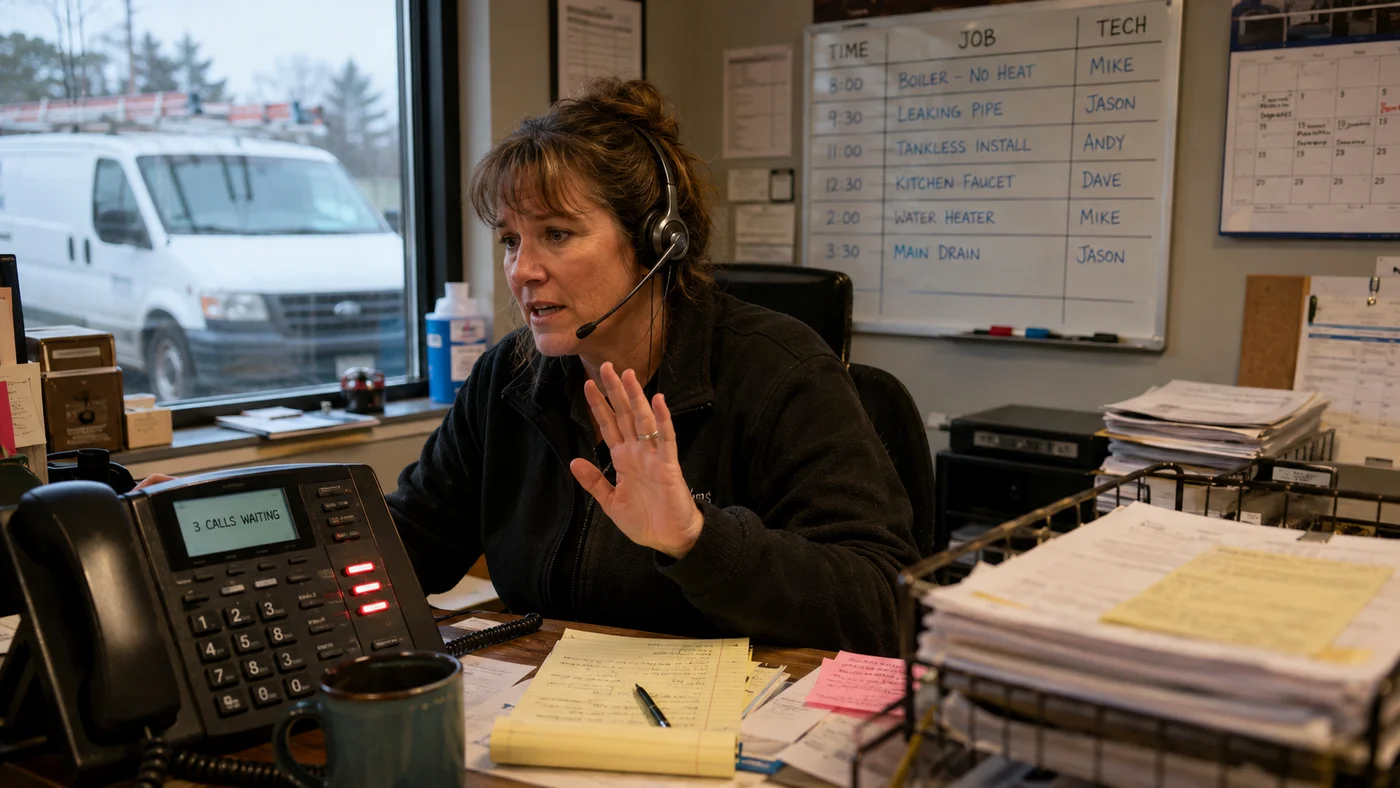
One person, one conversation. The other callers wait, whether they are people or software.
That limitation matters more when software starts making calls too.
Google is unlikely to be the last agent contacting businesses on behalf of customers. Search engines, marketplaces and personal assistants are moving from “show me information” toward “do this for me.”
Some will use websites or APIs. When neither works, almost every business already supports one universal integration protocol:
A phone number.
A useful answer is not always an exact price
For many trades, quoting over the phone is impossible. A roofer needs to inspect the roof. A plumber needs to see the leak. An HVAC replacement depends on equipment, ductwork and several details that refuse to fit neatly into a search result.
That is fine.
A useful answer can be:
“Yes, we do that work. We serve your area. We can come tomorrow. The diagnostic visit is $129, and we quote the repair after inspection.”
The caller did not get a magical fixed price. It learned that the business does that work and can actually come out.
More importantly, somebody answered.
The front desk is becoming infrastructure
A modern front desk must work when the team is busy, after hours and when several calls arrive together. It should answer the routine questions the same way every time, and know when to put a person on instead.
That does not mean replacing a good receptionist. It may mean giving them overflow. It may mean a virtual assistant takes the questions about Saturday hours so the people take the calls that need judgement.
FrontSail AI was built around that idea: a business should not lose an opportunity because everyone happened to be doing actual work when the phone rang.
Increasingly, that caller may not even be human.
Google used to crawl your website. Now it can call your business.
For years, local companies optimized their websites so Google could understand them. So:
What does Google hear when it calls you?
Make sure somebody answers
Search used to deliver the customer to your door. Now it may knock first, and write down who opened.
With FrontSail AI, you can create a virtual Frontdesk assistant that answers the calls your team cannot: after hours, during the overflow, and when three callers arrive at once. It knows your services, your service area, your hours, and your pricing policy, and it knows when to hand the call to a human instead of inventing an answer.
Start with the calls you already miss. That is where "couldn't reach" comes from.